"Kohoutek: Comet of the Century" TIME, 17 December 1973
http://www.time.com/time/magazine/article/0,9171,908347,00.html
ALAMO IMAGES: Changing Perceptions of a Texas Experience
http://www.humanities-interactive.org/texas/alamo/ex004_01a.html
Ancestors of Larry Lee HAKEL (Samuel Cole)
http://freepages.genealogy.rootsweb.ancestry.com
Barbie
http://www.littledoll.com/id/id.html
Billboard Magazine Archives
http://www.billboard.com/#/archive
Camp Fire Boys and Girls
http://www.campfire.org
Comet Kohoutek, NASA
http://history.nasa.gov/SP-4208/app.f.htm
Edward Bowes, Find A Grave Memorial
http://www.findagrave.com/cgi-bin/fg.cgi?page=gr&GRid=120
Earth Hour Global Site
http://www.earthhour.org
The Fascinating History of Billboard Magazine
http://www.events-in-music.com/the-fascinating-history-of-billboard-magazine.html
Freedom's Journal, Wisconsin Historical Society
http://www.wisconsinhistory.org
History of Early American Taverns
http://www.2020site.org/americantavern
International Decade for Action 'Water for Life'
http://www.un.org/waterforlifedecade/background.html
International Theatre Institute
http://www.iti-worldwide.org
National Cherry Blossom Festival
http://www.nationalcherryblossomfestival.org/cms/index.php?id=390
Yellowstone National Park
http://www.nps.gov/yell/index.htm
National Women's History Project
http://www.nwhp.org
Official Site of the Iditarod
http://www.iditarod.com
Pi Day
http://www.piday.org
Prince Kuhio Day
http://home.hawaii.rr.com/hawaiianweb/holiday09.html
Read Across America
http://www.nea.org/readacross
See It Now
http://www.museum.tv
St Urho: Legendary Patron Saint of Finland
http://www.sainturho.com/menahgamn/menastatue.htm
Ultimate St. Urho Site, The
http://www.theminx.com/iss3vol2/legend.htm
Winston Churchill Memorial and Library
http://www.churchillmemorial.org
World Day of Prayer
http://www.worlddayofprayer.net
World Meteorological Organization
http://www.wmo.ch/pages/index_en.html
© Dwarf Designs 1998-2021
LAST UPDATED: 4/28/20



 The month of March, known as Martius in the Roman calendar, was named to honor the Roman god Mars. It is believed the name of Mars came from the existence of an Etruscan god named Maris, who was the god of agriculture and fertility. Legends exist Mars was the father of the twins Romulus and Remus, founders of Rome, who traditionally honored and paid tribute to him at the beginning of each spring season. Originally a god of fertility and agriculture, and protector of the land and its inhabitants, as the centuries passed, the farmers of Rome became soldiers of the Empire. Their god over the land went with them, and Mars became known as the god of war.

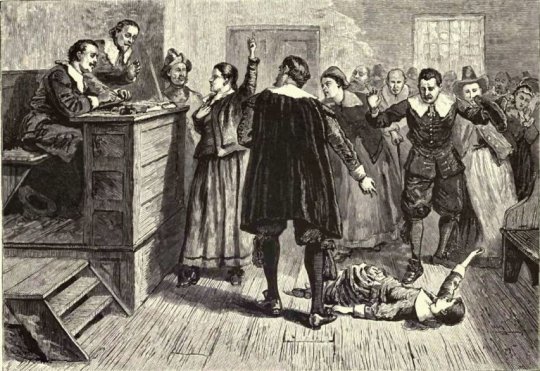 It was during the winter of 1692 when several girls in the Salem Village area began to have unexplained fit to which no physical evidence could be found. Because of the political and religious climate of that time, it was determined to be caused by nothing less than witchcraft. The first three people accused and arrested for the alleged afflictions were Sarah Good (a poor woman known for begging from her neighbors), Sarah Osburne (who was not a regular church attendee), and a slave from the Carribean named Tituba. These women were brought before the local magistrates on the complaint of witchcraft and interrogated for several days, starting on this day in 1692, then sent to jail. The witch hunt continued across four counties of colonial Massachusetts between February 1692 and May 1693. Over 150 people were arrested and imprisoned: 29 people were convicted of the capital felony of witchcraft; 19 of the accused were hanged; 1 man, refusing to enter a plea, was crushed to death under heavy stones; 5 of the accused died in prison. At its end marks the last time anyone in the United States was executed for witchcraft. Although speculative causes of the symptoms of those who claimed affliction range from air-borne and/or ingested disease to psychological conflicts regarding jealousy, fear, or simply winter boredom, the Salem Witch Trials remain highly visible in American culture, bringing to prominance the story of innocent people being accused and convicted on untrustworthy evidence.

 evolved into ensuring not only medical facilities for the wounded and sick in combat, but also for protection of refugees, particularly women and children, and the elderly.
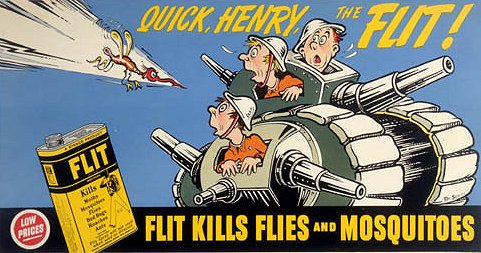
 Born on this day in 1904, Theodor Seuss Geisel (better known as Dr. Seuss) was an American writer and cartoonist who wrote and illustrated 44 children's books, using a rhyming text with outlandish creatures to make reading a youthful pleasure for over 60 years. His early career began with his college newspaper, then graduated to a humor magazine, and on to nationals such as The Saturday Evening Post, Life, Vanity Fair, and Liberty. He became nationally famous from his advertisements for Flit (a common insecticide at the time), and supported himself and his wife through the Great Depression by drawing advertising for General Electric, NBC, Standard Oil, and many other companies.
  As World War II began, Dr. Seuss turned to political cartoons, drawing over 400 in two years as editorial cartoonist. He joined the Army in 1943 as commander of the Animation Dept of the First Motion Picture Unit where he wrote propaganda films that included Design for Death (a study of Japanese culture) that won the Academy Award for Best Documentary in 1947, and Gerald McBoing-Boing, winning the Academy Award for Best Animated Short Subject in 1950. After the war, Dr. Seuss returned to children's books, writing what many consider to be his finest works, including such favorites as If I Ran the Zoo, Scrambled Eggs Super!, On Beyond Zebra!, If I Ran the Circus, and How the Grinch Stole Christmas!.
 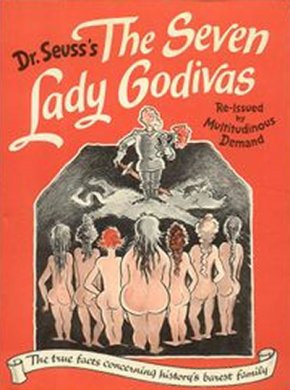 In 1954, Life magazine published a report on illiteracy among school children, prompting Seuss' publisher made up a list of 400 words he felt were important and asked Dr. Seuss to cut the list to 250 words and write a book using only those words. Nine months later, Seuss, using 220 of the words given to him, completed The Cat in the Hat. At various times Seuss also wrote books for adults that used the same style of verse and pictures: The Seven Lady Godivas; Oh, The Places You'll Go!; and You're Only Old Once. He died in 1991, leaving a timeless legacy of entertaining style in drawing, verse rhythms, and imaginative characters, with a simplified vocabulary that continues to encourage readers of all ages. The Dr. Seuss National Memorial Sculpture Garden, located in his birthplace of Springfield, Massachusetts, features sculptures of Dr. Seuss and of many of his characters.
 The National Education Association (NEA) annually sponsors Read Across America, focusing the country's attention on how important it is to motivate children to read in addition to helping them master basic skills. NEA launched the Read Across America program in 1997. The nationwide reading celebration takes place each year on or near the birthday of Dr. Seuss, who epitomizes a love of learning.
 written in 1814 by the poetic attorney, Francis Scott Key, after the bombardment of Fort McHenry in Baltimore. On returning to shore, he gave the poem to his brother-in-law, Judge Joseph Nicholson, who realized the words fit a popular British drinking song (To Anacreon in Heaven by John Stafford Smith), and so the work was jointly distributed. It increased in popularity as renamed The Star-Spangled Banner through several newspaper publications, and by the end of the 19th Century was considered an American patriotic song. Generally played on American holidays (particularly the 4th of July), it was made the official flag-raising song in 1889, and opened baseball games during the late 1890s. In 1916, President Woodrow Wilson ordered that The Star-Spangled Banner be played at military and other appropriate occasions. But it was not until 1929 when Ripley's Believe it or Not! pointed out to the public that the United States had no official national anthem, that public interest rose it making it so. The public endorsement for its spirit of inspiration by influential conductor for American military and patriotic marches, John Philip Sousa, resulted in it being adopted as the national anthem of the United States on this date in 1931.
 Remembering James Doohan
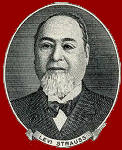 Since its earliest references in the 1400s, denim fabric was first used by navy personnel around the world. Five hundred years later, blue jeans have become a wardrobe staple, with the average North American owning seven pairs. During the years of the California Gold Rush, a German dry goods merchant living in San Francisco named Levi Strauss (born on this day in 1829) was selling blue jeans under the "Levi's" name to the mining communities of California. One of his customers was a tailor who frequently purchased bolts of cloth from the Levi Strauss and Co wholesale house, had an idea to use copper rivets to reinforce the points of strain, such as on the pocket corners and at the base of the button fly. He contacted Strauss suggesting they both go into business together, and Levi Strauss and Company became the first to manufacture blue jeans in 1853. For nearly 100 years, jeans were a popular form of clothing for laborers, but adopted as casual wear by teenagers and young adults during the 1950s as a symbol of mild protest against conformity, and was considered by some older adults as disruptive. By the 1960s, both men's and women's jeans had the zipper down the front, and the wearing of blue jeans became more acceptable. Aside from the original jeans, there are ankle jeans, baggy jeans, carpenter jeans, skinny jeans; bell bottom, bootcut, wide leg, straight jeans; low-rise jeans, hip-huggers, relaxed Fit, phat pants, slinkies; and jorts.
 Samuel Cole, his wife, Anne, and young son, John, were among the colonists immigrating to the Americas under the leadership of John Winthrop, who established the town of Boston in 1630. The town was begun along the irregular water front, with houses built inland toward a central square, where government, religion, marketing, and socializing brought the community to life. Although the dominant cultural force at the time was Puritanism, it was understood settlements needed a place for neighbors to gather, to socialize, and exchange news and opinions. It was also a Puritan belief that consumption of alcohol, and other types of debauchery behavior could be contained in such places (then called "ordinarys"), and within several years of colonization, governments began enforcing the idea each community must have at least one such place. Anne Cole died shortly after their arrival in the New World, and Samuel continued by becoming, on this date in 1633, the owner and operator of the first tavern in the American colonies, aptly named Cole's, in the center of the town commons. Known as the Corn Court during colonial times, legend has it that Cole's remained a tavern, remodeled, renamed, and rennovated through several owners, and the area itself maintained as a social gathering spot for the following 300 years.
 countries, have a continuing relationship in prayer and service. The origins of World Day of Prayer date back to 1812 when Christian women of the United States and Canada felt a need to encourage one another in sustaining their beliefs in prayer, and their mission work at home, and in other parts of the world. Armed with a vision of interdenominational Christian unity, by 1897, women of six denominations had formed the Women's Inter-Church Council for a united day of prayer for home missions. Organized through speaking engagements that provided women with local and global linkage, in prayer and information sharing, and in biblical reflection, an interdenominational Central Committee was organized to prepare publications, summer conferences, study days and courses, so that women could become informed about the lives of women in other parts of the world, and could study biblical foundations and vital issues related to mission work. A call for for united prayer and action resulted in the concept of a National Day of Prayer, adopted in 1927 to a World Day of Prayer. Celebrated annually on the first Friday of March.
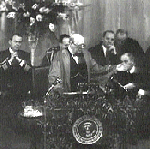 At Westminster College in Fulton, Missouri, the John Findley Green Foundation lecture series was established in 1936 to present speakers of international reputation promoting an understanding of economic and social problems of international concern. On this day in 1946, spectators watched the motor cavalcade travel from the train station in Jefferson City to the college in Fulton, carrying the Foundation's invited speaker, Winston Churchill. His invitation had been endorsed by his traveling companion, President Harry S. Truman. They attended a private luncheon at the home of Westminster's president before marching into the crowded gymnasium at the end of the long academic procession. Introduced by President Truman, Churchill presented what he titled the Sinews of Peace address, advocating a strong continued alliance between Britain and the United States, stressing the need for tight controls on the development of nuclear science, and urging support of various United Nations peace efforts. However, it was his dark picture of European development during that time of post-war power struggles that his speech became better known as his "Iron Curtain" speech, referencing an impending Soviet threat.
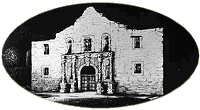 Texas history was the first and last stand for the volunteers, led by South Carolina attorney Willian Barret Travis, meant to hold up Santa Ana's invasion on the north shore of the Rio Brazos to buy time for Sam Houston to build up his army. The garrison held out for 12 days. On this day in 1836, Day 13, the 189 Texas volunteers defending the Alamo died in a surprise, pre-dawn attack. While the battle was a victory for Santa Ana, the brave stamina of those holding their defensive position in the face of overwhelming odds became an inspirational battle cry for Texan independence, as Sam Houston's army prevailed at the Battle of San Jacinto the following April.
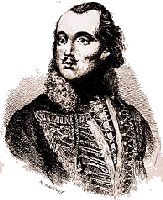 Washington for a position with Continental Army.
 Remembering Elizabeth Barrett Browning
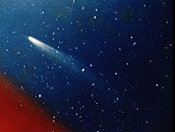 estimated nucleus is about 25 miles in diameter, sporting a 25° tail, and projecting a path that would pass within 13 million miles of the Sun. Its size and near approach to the sun indicated that it would be a dazzling event in the night sky as it passed within the visibility of Earth, expected in late December 1973.
 First put forward at the turn of the 20th century, amid rapid world industrialization and economic expansion that led to protests, International Women's Day has become a major day of global celebration highlighting political and social awareness of the struggles of women worldwide, and to acknowledge the contribution of women to international peace and security. The first international women's conference was held in1910 Copenhagen, and by its second conference in 1911, International Women's Day was established as 8 March every year. It was first recognized as an official state holiday in the former USSR, and is still an official holiday in many countries across western Europe and Asia. Since 1977, the United Nations Day for Women's Rights and International Peace continues to make the demand for women's rights and participation in the political and economic process a growing reality.
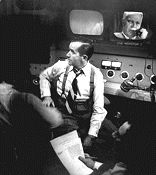 CBS in November of 1951. Maintaining the innovative magazine-style reporting from their popular radio show, Hear It Now, its TV adaptation broke the news standards of the time and set the path for the future of documentary news coverage. In a world of anchored news reporting, the show developed the industry's first autonomous news unit, and employed its own camera crew, which often filmed on location for unrehearsed interviews. See It Now became the first live broadcast coast-to-coast, with Morrow as its commentator set against a backdrop of studio monitors, microphones, and working crew. Rather than reporting the news, Murrow brought to the television audience insightful analyses of contemporary, and often controversial issues, using taped interviews, interposed with live studio commentary. From political coverage, through addressing the tensions of the nuclear age, bringing the Korean War home for Christmas, documenting the effects of the Brown v. Board of Education desegregation decision, and examining the link between cigarettes and lung cancer, the show developed a hard-hitting reputation. Morrow's courage and commitment to delivering the news became most prominent when See It Now openly confronted the anti-Communist hysteria created by Senator Joseph McCarthy, airing the episode "A Report on Senator Joseph R. McCarthy" on this date in 1954. Utilizing audio and video segments of McCarthy's speeches and Senate hearing interrogations, it was the opinion of the See It Now creators the threat to American democracy was not in Commmunist infiltration, but in allowing McCarthy's continued persecutions and denials of Constitutional rights of those accused. Although the broadcast provoked an overwhelming, positive viewer response, Morrow's controversial approach to the news slowly cost him influence with network executives, as well as major sponsors. The show was eventually moved to Sunday afternoon to air as a series of specials, then discontinued production in 1958. See It Now left in its wake a solid foundation for responsible news program production, and Edward R. Murrow remains a legendary icon for honesty and integrity in news reporting.
 Remembering Amerigo Vespucci
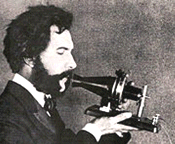 Even as a young child, Alexander Graham Bell had a curious mind and showed skills of being a natural inventor. He spent much of his life studying the elements of sound and language, and an opportunity to see an early type of robot which simulated the human voice, turned Bell's thoughts to the possibilities of transmitting sound through electrical wires. Early progress led to a device he called a "harmonic telegraph" through which messages could be transmitted using a different pitch for each message. This work evolved into a "phonautograph," a pen-like machine that could draw shapes of sound waves on smoked glass by tracing their vibrations, which led him to believe it could be possible to correspond sound waves to electrical currents. Unfortunately he had no working model of his idea, but was able to find financing from two wealthy patrons, who also contributed a patent attorney named Anthony Pollok to the project. Bell and Pollok presented Bell's idea of transmitting the human voice by telegraph to the director of the Smithsonian Institution, who called it "the germ of a great invention" and encouraged Bell to keep to task. A chance meeting between Bell and an electrical designer named Thomas Watson resulted in getting the equipment needed to continue his experiments with acoustic telegraphy. A year later came a sound-powered telephone, able to transmit sound, but not clear speech. Realizing the project was near completion, Bell's financiers sent the patent attorney to file an application with the patent office for the telephone, and a patent was issued. It was on this day in 1876 that Bell experimented with a water transmitter, and was heard by Watson in an adjoining room to say the very first words spoken on a telephone, "Mr Watson - Come here - I want to see you". By the end of that summer, using an improvised wire strung up along telegraph lines, fences, and through a tunnel, Bell spoke to people in a telegraph office five miles away, proving long-distance transmissions were possible, and the telephone was born.
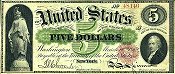 During the first year of the Civil War, it became important to solidify the banking system of the Union in order to meet wartime expenses. Introduced by Congressman Elbridge Spaulding (R-NY), a controversial bill making paper currency legal tender, payable on demand by the U.S. Treasury, was signed into law by President Lincoln on 25 February 1862. Commonly known as greenbacks, the co-existence of new and old forms of money was ended on this day in 1862 by amendments to the Legal Tendar Act which resulted in the old currency being taken out of circulation.
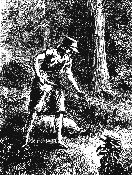 John Chapman, better known as Johnny Appleseed, lived from 1775 to 1845, and spent all of his adult life nurturing the frontier of Ohio and Indiana with apple trees. According to the only known contemporary story of him published in an 1871 issue of Harper's Magazine, he would find areas suitable for planting, then allowed settlers to buy the saplings for their farms. He did sell them on credit, but rarely collected more than by trading goods. A small, wiry man with long dark hair and a scanty beard, with keen black eyes that seemed to sparkle. Maintaining no home of his own but the wilderness, he was known as a simple man who travelled the countryside with no possessions, wore no shoes (even in the winter), was seen wearing only a sackcloth, and respected the earth and its creatures to the point he would sometimes not light a fire to protect the moths at night. Chapman was a welcome sight to each community and farm he might pass by, and was especially kind to the children. During his visits, he would distribute pages of the Bible, and often read with dramatic passion to families around the fireplaces. There is also a story of him during the War of 1812, where he raced from house to house warning the settlers of impending raids. Johnny Appleseed was a legend in his own time for his kind and generous ways, and known today as a leader in conservation. Johnny Appleseed Day is celebrated both 11 March and 26 September. The September date is Appleseed's acknowledged birthdate, but the March date is sometimes preferred because it is during planting season, even though it is disputed as the day of his death.
 Remembering Lawrence Welk
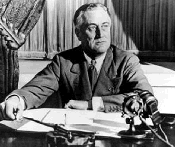 Franklin Roosevelt was one of America's first politicians to utilize the growing medium of radio to speak directly to his constituents, beginning during his first term as Governor of New York in 1929. At the dawn of the Great Depression, as the nation was enduring severe economic crises, he began making these informal speeches as President with the intention of inspiring confidence in his governmental recovery programs, and encouraging a unified nation of active citizens. Known as the Fireside Chats, began on this day in 1933, President Roosevelt used a calm and reassuring voice to make his addresses accessible and understandable to ordinary Americans, using stories, anecdotes, and analogies to explain the complex issues facing the country. There were thirty Fireside Chats between 1933 and 1944, with topics ranging from the New Deal Program, the Recovery Program, Drought Conditions, Unemployment, and Economic Conditions, to the workings of politics, and through the early years of World War II. The Chats were relatively brief, ranging in length from fifteen to forty-five minutes, broadcast on all national networks around 10PM Eastern time to reach the most people. Sometimes beginning his talks with "Good evening, friends", referring to his audience in terms of "you" and "we," he constructed a sense of national identity, encouraged individual participation, and enabled Roosevelt to connect with the public in a way no other president had before, and few have since.
 Uncle Sam is the national personification of the United States, usually depicted as a serious elderly man with white hair and a goatee, and dressed in red, white, and blue clothing that are the design elements of the United States flag. The origin of the name can be traced to a meat packer in Troy, New York named Sam Wilson who supplied rations to the US military during the War of 1812. It was an employee who made a joke of the Uncle Sam meaning for the "US" stamped on the packaging, and the story spread from there. The earliest known reference to Uncle Sam in the sense of the US government appeared in 1813 in the Troy Post, and the Uncle Sam cartoon figure made its debut in the New York Lantern Weekly on this day in 1852. Although the tale of Sam Wilson is disputed, Congress adopted a resolution in 1961 "Resolved by the Senate and the House of Representatives that the Congress salutes Uncle Sam Wilson of Troy, New York, as the progenitor of America's National symbol of Uncle Sam."
 Began in 1918 as an effort to "preserve daylight and provide standard time for the United States", Daylight Saving Time proved so unpopular, it was repealed in 1919. Roosevelt brought it back as "War Time" in 1942, then left it to the discretion of individual states after 1945. This obviously caused a lot of confusion for national industries (like transportation), and the quickly evolving field of broadcasting. It was the Uniform Time Act of 1966 that created Daylight Saving Time to begin on the last Sunday of April and to end on the last Sunday of October, amended in 1986 to begin on the first Sunday in April. The next generation of DST brings the Energy Policy Act of 2005, extending it month beginning in 2007, starting the second Sunday in March (spring forward) to the first Sunday in November (fall back).
 approximately equal to 3.14159, 14 March at 1:59PM is commonly known as the Pi Minute; 1:59:26PM being the Pi Second. Albert Einstein's birthday also happens to be 14 March. Founded by Larry Shaw (the "Prince of Pi") in 1988 at the San Francisco Exploratorium, the ritual began with staff and visitors marching around one of its circular spaces, and then consuming fruit pies. Including the singing of Happy Birthday to Einstein, today's celebrations include Pi rapping, Pi demonstrations, Pi films, and pizza Pi sampling.
 Irish Americans are citizens of the United States who claim Irish ancestry and comprise approximately 15% of the US population. Proud of their heritage, Irish-Americans have brought to the Melting Pot that is America successful contributions in all aspects of American life, and are so honored by Presidential Proclamation during March as Irish Heritage Month.
 Remembering Casey Jones
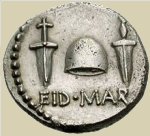 In the Roman calendar, the term ides was used for the 15th day of the months of March, May, July, and October. Popularized by a Shakespearean play, it is most commonly associated with the date Julius Caesar ignored a fortune-teller's warning of impending doom on the Ides of March and was stabbed to death on his way to the senate-house. It was also not a good day for Cao Cao, one of the greatest warlords of the Three Kingdoms Era of China, who also died on the Ides of March in 220AD, nor for Tsar Nicholas II of Russia, forced to abdicate on this day in 1917. Considered a modern metaphor for impending doom, the Ides of March appears as the subject in music, film, television, and video games. The day is also celebrated every year by the Rome Hash House Harriers with a toga run in the streets of Rome, in the same place where Julius Caesar was killed.
 8-foot, 2-inch yellow bird with a global fan-following, celebrated his 6th birthday with a special program created for a PBS pledge drive. Although it first aired in prime-time, it was on this date in 1991 the special appeared during the show's usual time slot. Starring with his best pal Snuffy, the two friends head to the skating rink for Big Bird's birthday, encountering an series of adventures along the way with guest stars Bo Jackson, Robin Williams, Whoopi Goldberg, and Ray Charles. The show later became incorporated into the regular season after inserts were added to make it a 60-minute episode.
 coverage of radio in the 1920s. By the 1930s, with the widespread development of the juke box, it started publishing the music charts, which continue as the most influential publications in the music industry. In 1940, Billboard's first Music Popularity Chart was calculated, which included single songs, usually determined by sales and airplay. Expanding its popular idea, it was on this day in in 1945, Billboard first published a Premier Album Chart, naming the nation's first #1 album as The King Cole Trio (Volume 1), featuring a rising young artist named Nat King Cole.
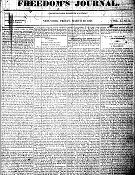 Freedom's Journal was the first African-American owned and operated newspaper published in the United States. Founded by African-American New Yorkers who sought to give black Americans a voice unheard in the mainstream press, it was a weekly publication from this date in 1827 to 1829, circulated in 11 states, the District of Columbia, Haiti, Europe, and Canada. Freedom's Journal provided international, national, and regional information on current - events and contained editorials declaiming slavery, lynching, and other injustices. The Journal also published biographies of prominent African-Americans and listings of births, deaths, and marriages in the African-American community in New York. Edited by John Russwurm, Samuel Cornish served as co-editor during 1827, and continued publishing after Freedom's Journal with The Rights of All, published between 1829 and 1830. All 103 issues of the Freedom's Journal have been digitized by the Wisconsin Historical Society.
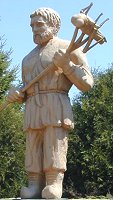 It is told St Urho, who lived in Finland before the last glacial period, banished from the vineyards a plague of grasshoppers feasting on the grapes. The day of 16 March, the day before St. Patrick's Day, tradition includes women and children dressed in purple and green, who gather around the shores and chant, while adult men, dressed in grasshopper green are driven back. The celebrations include song and dance, and the drinking of much grape juice. An urban legend of questionable origin, the stories seem to have risen from the area of Minnesota, with a large Finnish population, as far back as 1956. Through the antics of educators, business people, and retailers celebrating their Finnish origins, St Urho's Day eventually attracted widespread media attention. The legend of St. Urho has developed in many forms, with many humorous twists, and several entwining the legends of both St Urho and St Patrick, one result being the invention of an alcoholic drink named the Mickey Finn. While the existence of St. Urho, or of grapes and grasshoppers, has not been confirmed, St. Urho's Day has been recognized in all 50 states to honor Finnish-American heritage.
 Saint Patrick's Day is an annual feast day celebrating Saint Patrick, a patron saint of Ireland. It is a national holiday for the Irish people, and an international day celebrating Irish culture by people of Irish heritage (and many who are not), to include all things green, Irish food, green beer, and parades. The first civic and public celebration of Saint Patrick's Day in the 13 American colonies took place in Boston in 1737 when the Charitable Irish Society of Boston organized what was the country's first Saint Patrick's Day Parade. The first celebration of Saint Patrick's Day in New York City was held at the Crown and Thistle Tavern in 1756, and New York's first Saint Patrick's Day Parade was held on 17 March 1762 by Irish soldiers in the British Army. In 1780, General George Washington, commanding the Continental Army, allowed his troops a holiday on 17 March, which became known as the St. Patrick's Day Encampment. Originating in the Roman Catholic Church during the 17th century as a holy day of obligation for Roman Catholics in Ireland, in the mid-1990s the Irish government began a campaign to use Saint Patrick's Day to showcase Ireland and its culture by creating a 5-day national festival to bring its citizens together and internationally project the accurate image of Ireland as a creative, professional and sophisticated country with wide appeal.
 Remembering James Bridger
 Remembering Nat "King" Cole
 The Stanley Cup, awarded annually to the National Hockey League champion, is the most coveted ice hockey championship trophy in the world. Commonly referred to as The Cup, The Holy Grail, or as Lord Stanley's Mug, it is named after Lord Frederick Stanley of Victoria, who became Governor General of Canada in June of 1888. After attending his first hockey game at Montreal's 1888 Winter Carnival, he and his family became major fans of the sport. Two of his sons eventually formed a new team, actively participated in the formation of what later became known as the Ontario Hockey Association, and made an appeal to their father to donate a trophy recognizing hockey championship. It was on this day in 1892 that Lord Stanley sent a message to the victory celebration for the 3-time champion Ottawa Hockey Club he would like to donate a cup to be given annually to the winning team. He then purchased a decorative bowl, forged in England, with the words "Dominion Hockey Challenge Cup" engraved on one side of the outside rim, and "From Stanley of Preston" on the other side. Originally, Lord made five preliminary regulations regarding trustees of the cup, ownership, team requirements, and general maintenance. The first Stanley Cup was presented in 1893 to the Montreal Amateur Athletic Association for an undefeated season, but the Ottawa Generals challenged the decision because there had been no championship games scheduled, and because there had been no pre-season announcement of the rules on how the Cup was to be awarded. Consequently, the Cup trustees issued more specific rules on how the trophy should be defended and awarded, which remain today. However, Lord Stanley never saw a Stanley Cup championship game, nor did he ever present the Cup. Although his term as Governor General ended in September 1893, he was forced through a death in his family to return to England before the next season started. The original Cup is currently housed at the Hockey Hall of Fame in Toronto, and Stanley was inducted into the Canadian Hockey Hall of Fame in 1945 in the "Honoured Builders" category.
 Cliff Swallows are small migratory birds that breed in large colonies, building conical mud nests, preferably beneath overhangs on cliffs and human structures, and consume a diet consisting primarily of flying insects. For centuries, the birds have spent winters in Goya, Argentina, then make a 6,000-mile trek north to San Juan Capistrano, California in the spring. Mission San Juan Capistrano was founded in 1776 by Spanish Catholics of the Franciscan Order and operated successfully until the late 19th Century, when it began to fall into a state of disrepair. In July of 1910, a Roman Catholic priest named Father John O'Sullivan was put in charge of the ruins of Mission San Juan Capistrano. A noted restoration specialist, the Father personally worked on the restoration efforts while he recovered from chronic tuberculosis.
 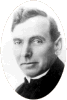 It was Father O'Sullivan who began documenting the annual habit of swallows nesting beneath the Mission's eaves and archways, from Spring through Fall, during his two decades in residence. Tradition has it that the main flock arrives on 19 March (coincidentally Father O'Sullivan's birthday, born 1874 Louisville, KY), and each year the City of San Juan Capistrano sponsors the Fiesta de las Golondrinas, a week-long celebration of this event. The birds fly south on 23 October.
 Remembering Wyatt Earp
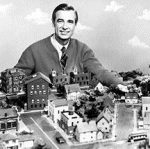 commercial television, starting in 1954 he worked for the next seven years at WQED in Pittsburgh as a puppeteer on a local children's series, The Children's Corner, where he developed many of the puppets, characters, and music that would be used in his later work. During this period, he used his lunch breaks to study theology at the nearby Pittsburgh Theological Seminary. Ordained in 1962, he was specifically assigned to continue his work with children's television. In 1963, Rogers moved to Toronto to develop a 15 minute children's television program for the Canadian Broadcasting Corporation, a hit with children which lasted three years. He then acquired the rights to his program, and moved the show back to WQED, taking with him things he had developed, such as King Friday XIII, Curious X the Owl, Trolley, Eiffel Tower, and the tree, and castle. Distribution of Mister Rogers' Neighborhood began on 19 February 1968, and moved to PBS the following year for a 33-year run, becoming the longest running program on PBS. Following his death in 2003, he was honored by a House of Representative Resolution for his landmark show that "inspired, taught, and encouraged children, families, and adults with messages of love, peace, and comfort" and by the Senate for his contributions in creating "a nurturing, educational program for children emphasizing the value of every individual and helping children understand how they fit into their families, communities, and country."
 Remembering Johann Sebastian Bach
 World Water Day is an international day of observance and action to draw attention to the plight of the more than 1 billion people world wide that lack access to clean, safe drinking water. Recognized since 1993, World Water Day was designated by the United Nations Conference on Environment and Development to bring attention to the world water crisis, and is part of a 10-year program, the 'Water for Life' Decade, to promote efforts to fulfill international commitments made on water and water-related issues by 2015. Studies have included water scarcity, water pollution, water disasters, and how water affects cultural growth in all areas around the world. The 2008 theme focused on the slow and insufficient progress made in global sanitation, relating to hygiene, sanitary facilities, water quality, wastewater treatment, and sewage systems.
 Sing Out Day
 Thirteen years later it had become obvious not only did people continue to drink alcohol, the effects of this prohibition included a massive disrespect for the law, and created a bootlegging industry that specifically encouraged the growth of organized crime. By 1933, public opposition to prohibition had become overwhelming. On this day in 1933, President Franklin Roosevelt signed into law the Cullen-Harrison Act, allowing the manufacture and sale of 3.2% beer effective 7 April. Although this attempt was not enough to appease the general population, sending the lawmakers back to the drawing board, it is noted that after signing the Cullen-Harrison Act into law, Roosevelt stated "I think this would be a good time for a beer." Hopefully he waited until April.
 At the dawn of the 20th Century, Edward Bowes was successfully working in realestate in San Francisco until a massive fire in 1906 ended his career. He decided to move east to New York City to explore other opportunities, and found the theatrical world quite lucrative. Working as a musical conductor, composer, and arranger, he was also able to produce Broadway shows, and eventually became managing director of New York's Capitol Theatre. What would become his best-known creation, Bowes hosted amateur nights on local radio stations before signing at WHN in 1934 with an increasingly popular show highlighting unknown talent titled Major Bowes and His Capitol Family. It was on this date 1935 that Chase and Sanborn began sponsoring the show on NBC, newly titled Major Bowes' Original Amateur Hour, which moved a year later to the CBS Radio Network for the remainder of its 18-year run. It quickly became radio's best-known talent show, and one of the most popular programs broadcast in the United States. Featuring a variety of newly-discovered talent, many of whom went on to become major stars, it set the foundation for other talent/variety shows moving into the era of television, including Ted Mack and The Original Amateur Hour, the Gong Show, and American Idol.
 Remembering Harry Houdini
 Remembering Roscoe Arbuckle
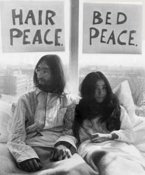 John Lennon, internationally renowned musician, artist, and author, used much of his personal time and public influence as a peace activist. His affair and subsequent marriage to Japanese artist, Yoko Ono, received massive press coverage, which John and Yoko decided to use to the advantage of their cause promoting world peace by inviting the press to share their honeymoon suite every day from 10am to 10pm for a week, beginning on this day in 1969. Known to be outspoken and irreverent in nature, given to outlandish and somewhat provocative behavior, John and his bride spent the next seven days in bed discussing their message and views of peace, while the media covered it on newspapers, magazines, television, and radio around the world. They repeated this effort the following May in Montreal, from where they recorded "Give Peace a Chance" that would become the peace anthem for anti-war protesters. John later remarked: "We're sending out a message, mainly to youth, or to anybody interested in protesting against any form of violence.... We did the bed-in in Amsterdam ... just to give people the idea that there are many ways of protest.... Protest for peace in any way, but peacefully, 'cause we think that peace is only got by peaceful methods."
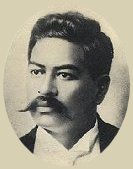 Prince Kuhio Day is an official holiday in the state of Hawaii, celebrated annually since 1949, commemorating the birth of Jonah Kuhio Kalaniana'ole on this date in 1871. A member of the royal family of Hawaii destined to someday take over the monarchy, his life took a turn when the monarchy was overthrown in 1893. After unsuccessful counter-revolutionary attempts to restore the monarchy, he left the islands with a new bride, and did not return until 1901. In the meantime, Hawaii had become a self-governing territory of the US. Kuhio decided to take an active role in politics, and was elected in a landslide victory to Congress as the Republican delegate in 1903. An educated man able to combine 19th Century American politics with traditional Hawaiian culture, Kuhio was a strong representative of his people, helping create local government at the county level still used today, and staffing the civil service positions with Hawaiian appointees. His most notable achievement was passage of the Hawaiian Homes Commission Act of 1921, a land trust for homesteading by Native Hawaiians, allowing them self-sufficiency, and the preservation of the values, traditions, and culture of Hawaii. Kuhio also organized the Order of Kamehameha, which held the first observance of Kamehameha Day in 1904, helped found the Hawaiian Civic Club.
 Remembering Duncan Hines
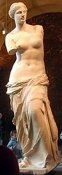
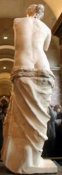 The Aphrodite of Milos, better known as the Venus de Milo, is one of the most famous sculptures from ancient Greece, carved from at least six to seven blocks of Parian marble. Pieces of the statue were initially discovered by a young farmer on the Aegean island of Milos in 1820, and with the help of a French naval officer, the piece was uncovered amid ancient ruins. Within two weeks, another French officer arranged to purchase it for the French ambassador to Turkey, but was unable to take it with him at the time. On arriving at their next port in Turkey, he sent someone back to retrieve it. In the meantime, the farmer was pressured into selling it to a priest who wanted it as a gift for a translator working for the Sultan in Constantinople. By the time the French representative returned, the statue was being loaded to a ship heading for Turkey, so the French representative persuaded the natives to honor the first offer instead. Venus de Milo was found with the arms, an apple in her raised left hand, the right hand holding a draped sash falling from hips to feet, although both hands were damaged and separated from the body. When French sailors had to fight for its possession, and as the statue was dragged across rocks to their ship, both arms were broken off, and the sailors refused to go back to search for them. The translator was not very happy about the reversal of the sale, and had the natives whipped, but was later reprimanded by the Sultan after the French ambassador complained to him about their mistreatment. As a statement of gratitude, the statue went to the French. The Venus de Milo was presented to King Louis XVIII in 1821, who presented the statue to the Louvre museum in Paris, where it still stands on public display.
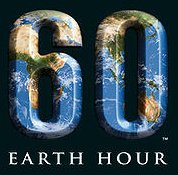 In 2007, the World Wildlife Fund, in partnership with the Sydney Morning Herald, inspired 2.2 million residents of Sydney, Australia, to turn off all non-essential lights and other electrical appliances for one hour in order to bring public attention to the urgent need to take action on climate change. Scheduled annually on the last Saturday of March from 8:30pm to 9:30pm local time, the 2010 participation included 4,000 cities in 96 countries, involving not only personal households, but businesses, schools, government buildings, and national landmarks, including the Sydney Opera House, the Forbidden City, the Brandenburg Gate, the Eiffel Tower, Big Ben, the Empire State Building, and the Las Vegas Strip.
 While humans have been covering their feet from the elements for a very long time, the concept of shoelaces is a fairly modern one. The earliest drawings of shoes indicate they were more than likely made of hide and secured by a strip of leather or twine. A little more sophisticated method becomes evident in medieval paintings and artifacts around the 12th century, which shows lacing through a series of hooks or eyelets down the front or side of the shoe. While early forms of shoelaces were made of leather, cotton, jute, hemp, or other materials used in the manufacture of rope, modern shoelaces are made from synthetic fibers, making them more slippery and to easily come undone.

 The National Cherry Blossom Festival has taken place since 1935 to commemorate the Japanese gift of cherry trees to the US on this date in 1912. Featuring a parade, street fairs, fireworks, cultural ceremonies and performances, this 2-week festival draws more than a million people each year to celebrate the cherry blossoms announcing springtime in the Capital.
 Remembering Gloria Swanson
 Born in 1913 Alabama, grandson of a slave and the son of a sharecropper, James Cleveland Owens (better known as Jesse Owens) spent his youth in Ohio, working part-time jobs after school to help support his impoverished family. He had a special talent for running, noticed first by his junior high school track coach, and by the time he was in high school, he was beating world records in the 100-yard dash and long-jump. Attending Ohio State University, where he picked up a nickname as the "Buckeye Bullet", he won a record eight individual NCAA championships. By 1936, he was headed to Germany as a member of the US Olympic Team, where he achieved international fame by winning four gold medals. Living through an era of racial inequality, Jesse Owens knew he was the best in the world at something, and used it to his advantage all his adult life to encourage others. Overcoming segregation, racism and bigotry, he began to use his celebrity as a professional speaker. Using an old-fashioned, spellbinding delivery, he praised the virtues of patriotism, clean living, and fair play, as well as stressed the importance of religion, hard work, and loyalty. He also sponsored and participated in many youth sports programs in underprivileged neighborhoods. Owens was awarded the Medal of Freedom in 1976, and posthumously awarded the Congressional Gold Metal on this day in 1990 for his athletic achievements and humanitarian contributions to public service, civil rights, and international goodwill.
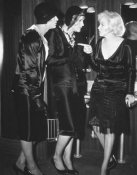 Some Like It Hot is a 1959 comedy film directed by Billy Wilder and starring Marilyn Monroe, Tony Curtis, and Jack Lemmon. with an all-star supporting cast. The story is about two male musicians from Chicago who witness a mob hit, and decide the best way to escape is to cross-dress themselves into an all-girl orchestra heading for Florida. Legendary stories revolve about the actual film production, from Monroe's difficulties in not only remembering her lines, but showing up for work on time, or walking off the set whenever she became frustrated. Her delays and unprofessional behavior are said to have cost the production roughly half a million dollars. Co-star Tony Curtis, uncomfortable with his own costuming, was apparently unhappy with his working conditions as Monroe's love interest, quoted at the time saying she was "a mean little seven-year-old" and that he would rather be kissing Hitler than her in their love scenes, comments which he later denied. It was rising star Jack Lemmon who fully embraced the role, spending hours learning makeup tricks, taking tango lessons, and spending time with a professional female impersonator. Yet despite all the production challenges, Some Like It Hot became an award-winning box office sensation from its initial premiere in New York on this date in 1959. It won the Golden Globe for Best Comedy. Marilyn Monroe won the Golden Globe for Best Actress in Musical or Comedy, and Jack Lemmon for Best Actor in Musical or Comedy. Nominated for 6 Academy Awards, winning Best Costume Design, Black-and-White, it is believed to be one of the greatest film comedies ever made.
 Remembering Oscar Mayer
 Jeopardy! is an international television quiz game show based on trivia in topics, where offering the right question is the answer needed to make the winning money. The show was created in the early 1960s by Merv Griffin, who also wrote a 30-second piece of music heard during the show's Final Jeopardy! Round, and which later became its theme song. Jeopardy! originally premiered on NBC on this day in 1964, hosted by Art Fleming, who stayed with the show for the next 11 years, earning two Emmy Award nominations. The show went into syndication between 1974 and 1975, then returned with Fleming for a short run between October 1978 and March of 1979. It was revived again in September of 1984 with a new host named Alex Trebek, who continues with the show today. Over the years, the show has developed special games, including the Tournament of Champions (featuring five-time undefeated champions), Celebrity Jeopardy! (where celebrities play for charity), Kids Week (ages 10-12), Teen Tournament (high school students), and the College Championship. In 2004, ratings for Jeopardy! jumped 22% when a contestent named Ken Jennings maintained the position of champion for a total of 75 games, and walked away with $2,522,700 after losing an answer which involved H&R Block. He returned in 2005 for 3-game finale to the Ultimate Tournament of Champions, which pitted 144 former champions against each other, with two winners moving on to face Jennings. Although he added another $500,000 to his cash stash, he did lose to a player named Brad Rutter, who is the all-time highest winner of any game show with $3,270,102. Considered one of the greatest game shows of all time, Jeopardy! holds a record total of 27 Daytime Emmy Awards since 1984, including 11 for Outstanding Game/Audience Participation Show, and 4 won by host Alex Trebek for Outstanding Game Show Host.
 Remembering Vincent van Gogh
 The film-making business was in its birthing stages at the dawn of the 20th Century, and by 1915, the Supreme Court set its first ruling that motion pictures were not covered by the First Amendment, allowing cities to pass ordinances banning the public exhibition of "immoral" films. When the industry was shaken by major scandals during the 1920s, involving murder, drug use, and various forms of sexual misconduct, public outcry over perceived immorality, both in Hollywood and in the movies, led to the creation in 1922 of the Motion Pictures Producers and Distributors Association to oversee Hollywood production. Working with marginal success for several years trying to establish a set of moral standards for the movies, the advent of talking pictures in 1927 encouraged a more formal written code was needed. Encompassing what its administrators deemed appropriate, the basis for the code was that films should not be produced that would lower the moral standards of those who see it (such as making crime and other wrong-doing appealing). Leaving the loophole of "subject only to the requirements of drama and entertainment" and " to the dictates of good taste", guidelines prohibited nudity and suggestive dances, excessive and lustful kissing, and references to sex perversion, sexually transmitted diseases, and childbirth. There was to be no obscene language, depiction of drug and alcohol use, detailed brutal killings, and methods of crime (such as safe-cracking or arson) were not to be explicitly presented. Ridicule of religion was forbidden, sanctity of marriage and the home had to be upheld, and the flag of the United States was to be treated respectfully. It was on this date in 1930 the Motion Picture Production Code was adopted, but no provisions were made for effective enforcement. An amendment to the Code was in 1934 which established the Production Code Administration, requiring all films to obtain a certificate of approval before being released.m For more than 30 years, major studios adhered to the code primarily because they preferred self-governing rather than Federal enforcement. During the mid- to late-60s, society changed in ways that made the code obsolete, and revisions were made in 1967 to the modern ratings system of G, M, R, and X. GP, PG, PG-13, and NC-17 ratings were added later.
 labor leader, and civil rights activist who co-founded the National Farm Workers Association (later named United Farm Workers), seeking to end racial and economic discrimination against migrant farm workers. Considered one of the most outstanding leaders of the 20th century, this day began in 2001 as a public holiday in California, has since spread to nine others (Arizona, Colorado, Illinois, Michigan, New Mexico, Texas, Utah, Wisconsin, and Rhode Island), and is currently being lobbied to be named as a national holiday honoring his achievements for farm workers, civil rights, political representation for racial minorities, and environmental justice.